

The emergent order
Notes on appetite and taste

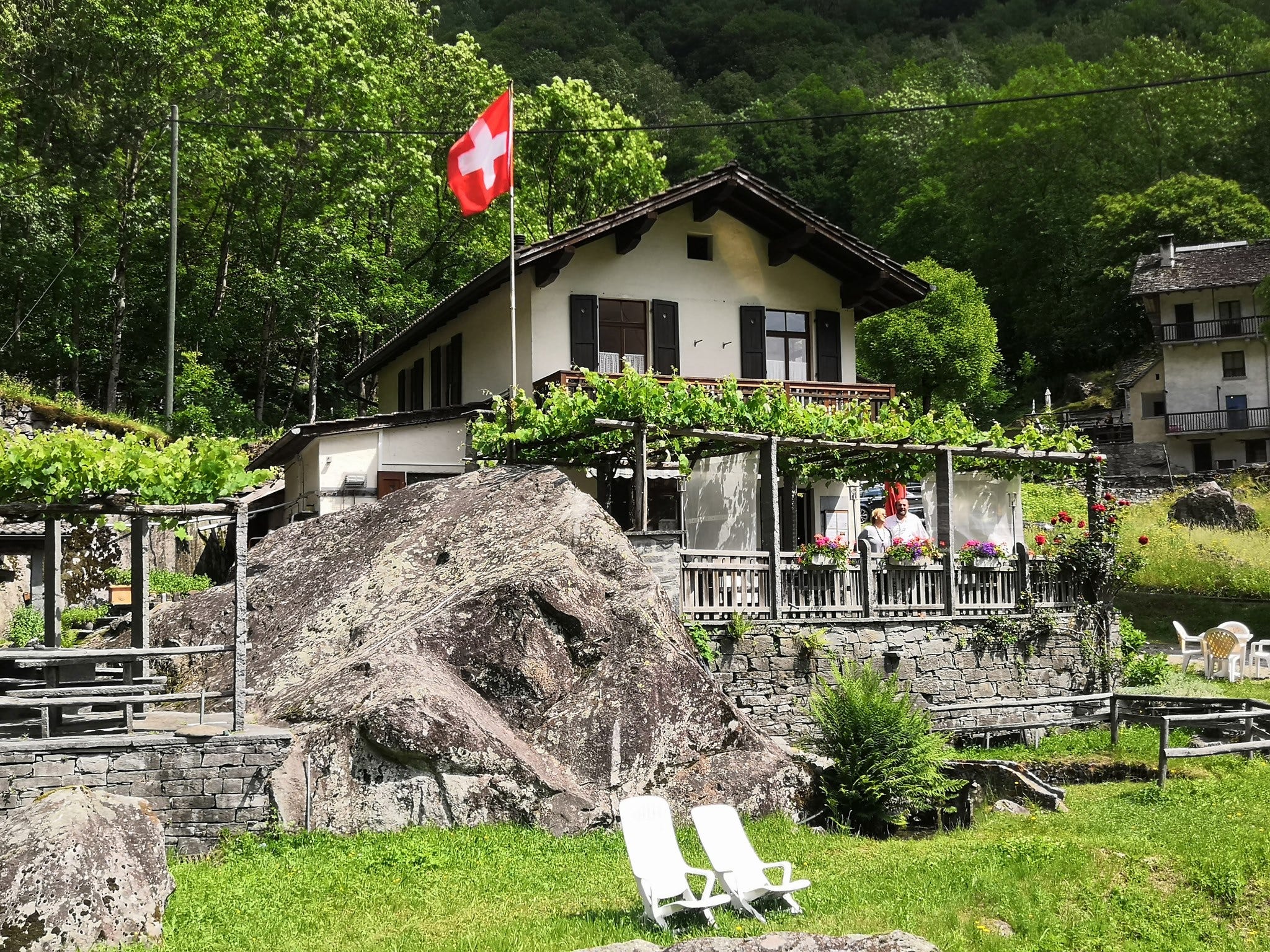
In 1979, I was an exchange student in the Swiss Tessin (Ticino), specifically in Fontana Val Bavona. At the time, the valley was the only one in Europe without electricity. If you needed power, you ran a gas generator. Otherwise, you read by candlelight.
The Italian dialect in that area used a vocabulary which differed from neighboring valleys in strange and amusing ways. For example, in the Val Bavona, “baloi” meant “big rock,” while in the next valley over, it meant “stoned” or “drunk.” I learned this because my host family owned a restaurant called the Grotto di Baloi — shown in the photo above, with a prominent big rock out front. The place is now an inn, and you can stay there. Or you can have a drink and, well…
The Val Bavona is an ancient and rugged landscape. Human settlements date back well before the Bronze Age, and its location in the Alps makes it very rocky. The ground at higher elevations vibrates when you take a step because you aren’t necessarily standing on soil, but rather upon layers of lichens.
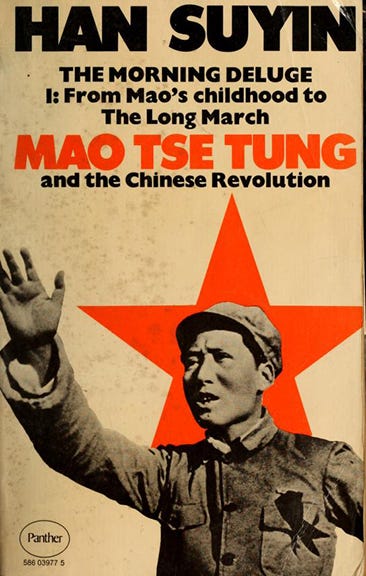
So there I was: first time in Europe, in a foreign landscape, not knowing the language, and the only English texts available were the Guitar Player magazines and Julian Bream tablature books in my suitcase, or the first volume of Han Suyin’s The Morning Deluge: Mao Tse Tung and the Chinese Revolution; which I found upon arrival.
While truly foreign, this experience was not uncomfortable. My world was all-of-a-sudden richer for it, and I was beginning to develop an appetite for seeing things differently — an appetite which became a personal defining quality.
Now I use the word “appetite” on purpose; mainly to set it in opposition to “taste.” This tension is a personal ordering principle, and one way in which to interpret the world. Simply put, taste is inner directed; while appetite is outer directed.
Taste is how groups validate themselves, recognize fellow members, and establish standards. But taste also restricts. And taste constricts.
Appetite, on the other hand, expresses curiosity and openness to the unfamiliar. It’s an acceptance, and appreciation of other tastes. Appetite says “yes” to taste’s “no.”
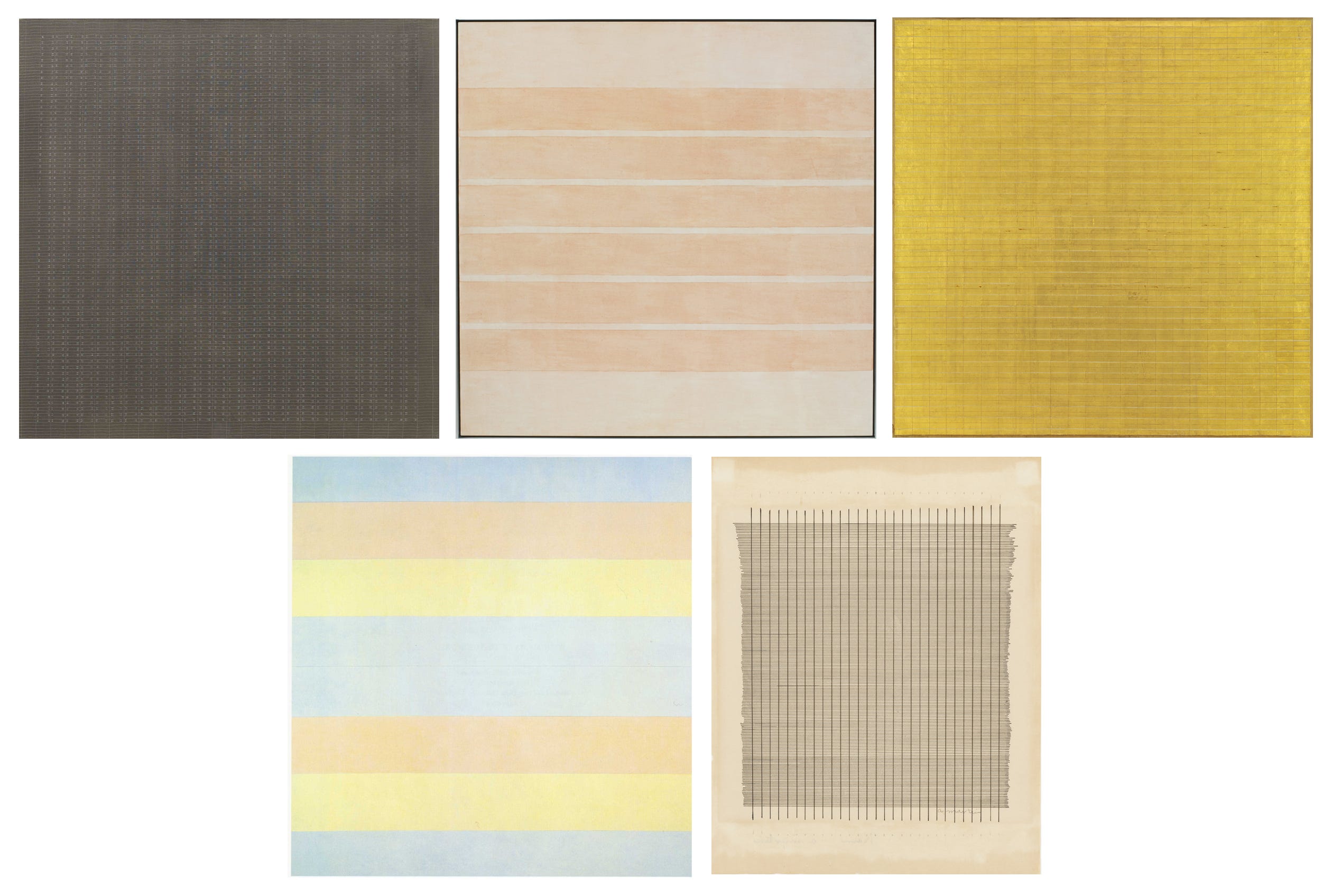
The point can be quickly made if we take the work of two different artists — Agnes Martin and Sigmar Polke — and place them on the taste/appetite spectrum.*
Martin’s work seems to be an attempt to lock in a vision of perfection; to achieve a platonic ideal; to freeze time itself. Inspired by atmospheric effects and the landscape, Martin made optical phenomenon conform to a gridded geometry. A serious geometry.
Polke, on the other hand, veered across formats and media; incorporating oil paint, printed fabric, photography, film, and even pulverized meteors. The work was never locked down; opting to trace across history, cultures, and time. And it was full of humor.
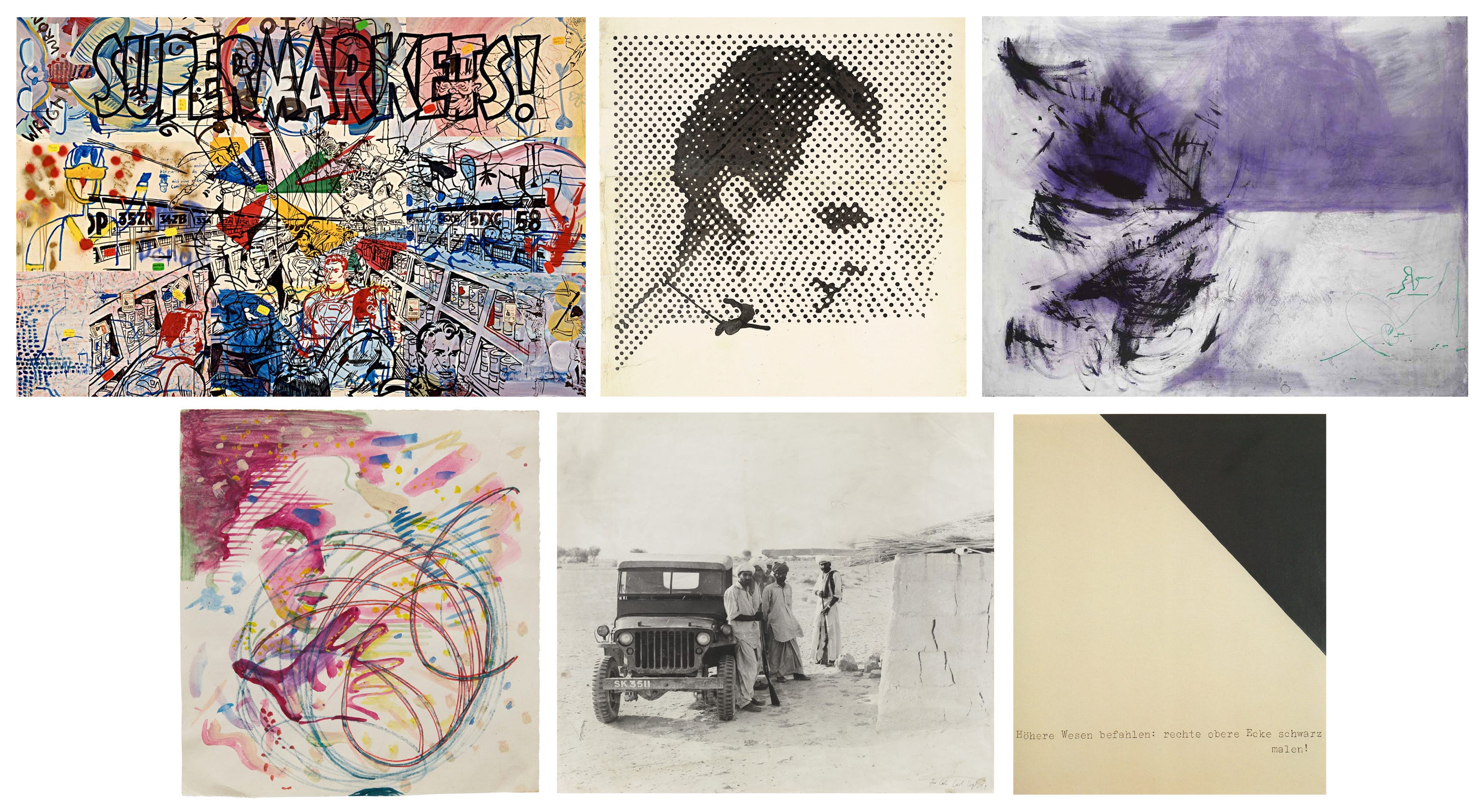
Both artists produced transcendent work. But the wild squirreliness of Polke’s project continues to intrigue me. Each group of pieces stands radically apart from all others. And while they may look and feel different, they strangely hang together into an overall sensibility.
Combined, Martin and Polke represent a fundamental question; one which helps define the roles of taste and appetite in a creative practice. Do things have a continual, immutable essence; or are they always in a process of becoming something else? Given my formative experiences, I think the later.
People who work in the creative industries — design, branding, advertising, television, fashion, music, etc. — like to think of themselves, and their work, as constantly changing. Each project is an opportunity to search the unknown, and they are mapping new territory; all in an effort towards eternity. And their more notably creative innovations are rewarded by any combination of industry awards, media attention, professional advancement, the admiration of one’s colleagues; or even installation in the pantheon of immortals.
Within this context of innovation, the answer to that fundamental question is that things are always becoming something else. But a tradition’s history tends to reinforce the idea of an immutable fixed essence.
Most creative innovators tend to have an awareness of their profession’s history, and are in constant dialogue with it. The greats that came before defined the traditions and set the standards which their descendants either measure themselves against, or try to surpass. In this environment, general agreements of quality are formed, recognized and rewarded. Over time, this becomes solidified into taste.
So how does a person working within a creative tradition resolve the interconnected and conflicting polarities of seeing the world as undergoing constant change on one end, and static, immutable essences on the other? What is the source of creative innovation?
Perhaps this is where a skeptical look at taste comes into play. There are beaucoups des creative evangelists writing books and speaking at conferences across the world; shoveling the breathless gospel of liberation through creativity. But this is a creativity weaponized for triumph and profit in the business world. A creativity directed through particular tastes and rewarded in any number of ways so it echoes and replicates until collapsing under its own weight.
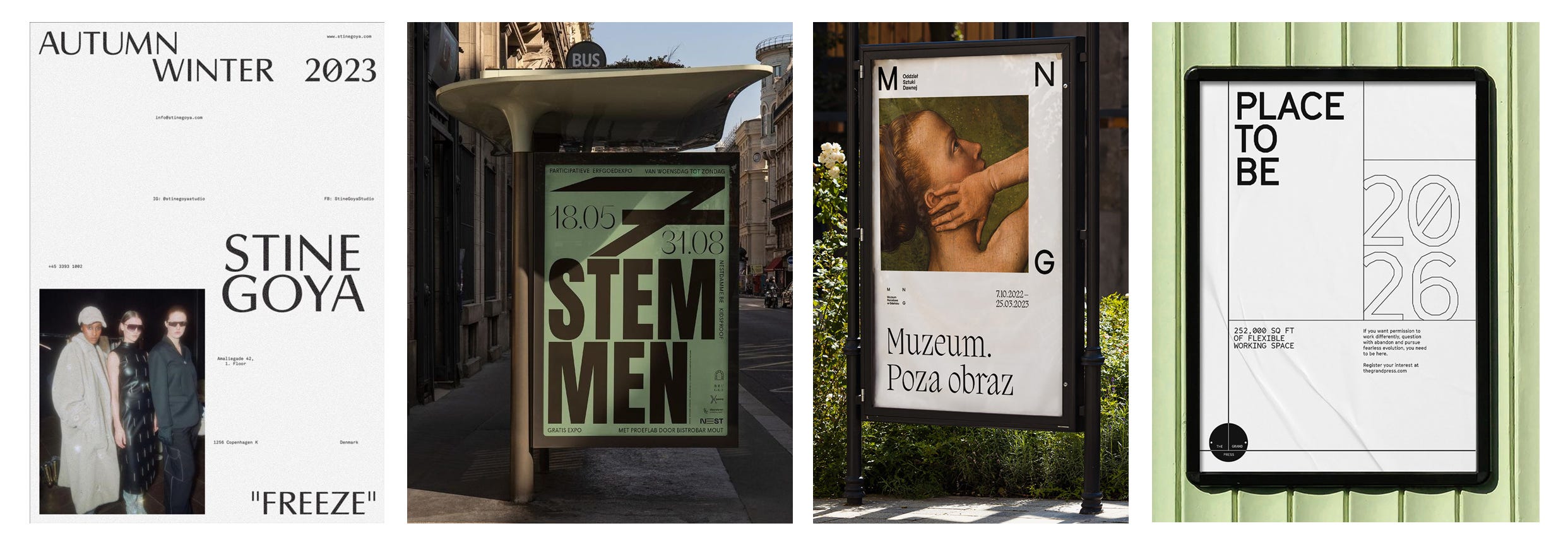
Current approaches to layout (shown above), the collisions of improbable typeface pairings, and casual attitudes to hierarchy have been in vogue for the better part of a decade. Having such work in one’s portfolio signals an awareness of graphic trends, and a willing compliance to the expectations of a designer; aka professionalism. Taste becomes a filter, and a tool of control. Design awards and blogs reinforce and reward these trends, which in turn create a sense of personal pride (perhaps, arrogance?) in one’s accomplishments.
Pride seems to be a common affliction in the creative industries. Where designers once possessed a rare set of skills, and knowledge of materials and processes acquired through years of experience; the barriers to entry have all been eliminated in the digital realm. Now anyone can become a designer.
Accomplishments are ephemeral. There is always another award season, another design to be featured on the blog du jour, and an emerging trend just down the road. Pride-bearing-on-arrogance is an unsustainable position in a landscape fractured by the unrelenting feeds of social media, multiple standards of excellence, and an incoming cohort of practitioners from astonishingly-diverse backgrounds and sensibilities. The walls are falling. And there are fewer and fewer kingdoms of taste; whether it be modernist, Biedermeier, new wave, or normcore. We rarely consume styles any more. Instead, we consume our individual identities and feelings.
Therefore, in order to remain relevant, perhaps the best move is to direct one’s focus outward and develop an appetite for the wild multiplicity of the world, as it is; not as one wants it to be. This means constantly questioning one’s preconceptions and tastes, loving the happenstance, and saying “yes” to more opportunities and experiences. This also means engaging in the hard work of developing one’s vision and connective abilities along with the traditional skill set of a chosen profession.
Designers are masters of the small judgement. They operate in a sphere where a sixteenth of an inch adjustment, the tightness of a closure, or the drape of fabric determine when a piece is done. There is a beauty to this kind of mastery. But there is also beauty in how one can find a place in the larger world through appetite.
Stepping outside one’s taste, like stepping outside one’s hometown, offers valuable perspective; and is a practice to be cultivated. As Nietzsche wrote in The Gay Science:
In order to see our European morality for once as it looks from a distance, and to measure it up against other past or future moralities, one has to proceed like a wanderer who wants to know how high the towers in a town are: he leaves the town. ‘Thoughts about moral prejudices,’ if they are not to be prejudices about prejudices, presuppose a position outside morality, some point beyond good and evil to which one has to rise, climb, or fly — and in the present case, at least a point beyond our good and evil, a freedom from everything ‘European,’ by which I mean the sum of commanding value judgements that have become part of our flesh and blood.
Individual taste is truly part of our flesh and blood. We think it defines us, and we would no more discard it like we would willingly discard our personal identity. But if we at least begin to question our tastes, along with all other preconceptions about what things are; the possibility for something even better emerges. We might even begin to approach a “freedom from … the sum of commanding value judgements;” the very topic which seems to be at the top of the current political discourse.
*Credit to the American curator, critic, painter, and writer Robert Storr for the distinction between Agnes Martin and Sigmar Polke.